Article Masthead
- Category: Policy & Regulation
- Topic: Regional Water Infrastructure / Policy
- Region: Asia-Pacific
- Signal Type: Infrastructure Funding Signal
- Published Date: 2026-09-07
- Original Source Date: 2026-09-04
01 What Happened
Local Government NSW and the NSW Water Directorate launched a six-point Regional Water Action Plan on September 4 for utilities serving almost two million people across regional, rural and remote New South Wales. The largest proposal is AUD 5 billion in capital grants over at least 10 years. The plan also calls for stronger drinking-water support on PFAS and other emerging contaminants, reduced regulatory burden, a Community Service Obligation model, AUD 4 million per year for a Local Water Utilities Alliance and a 10-year workforce program. This AUD 5 billion figure should be distinguished from the NSW Auditor-General’s separate finding that, based on council estimates, almost AUD 1 billion is required to bring water-supply infrastructure to agreed service levels. The larger figure is an advocacy position for a broader, longer-term program. NSW also reports that all public drinking-water supplies tested in 2024 or 2025 met the updated PFAS guideline values.
02 Key Takeaways
01 The plan calls for AUD 5 billion in capital grants over at least 10 years. 02 It includes PFAS support, workforce development and shared technical capability. 03 The Auditor-General separately identified almost AUD 1 billion in water-supply infrastructure needs to meet agreed service levels.
03 Why It Matters
Small utilities have fewer customers over which to spread high fixed treatment and renewal costs. Asset renewal is therefore a financial as well as technical challenge. PFAS adds requirements for monitoring, source-risk assessment, laboratory access and, if treatment is ever needed, specialist technologies such as GAC, ion exchange or membranes. The action plan is therefore not only a request for construction money; it is also an argument for predictable funding, shared expertise and workforce depth.
04 ATLAS Engineering View
For ATLAS, the key question is how funding becomes risk reduction. Assets should not be prioritized by age alone; condition, consequence of failure, hydraulic criticality, water-quality risk and future demand should all matter. PFAS also should not automatically trigger advanced treatment at every plant. With current NSW data showing compliance, the more rational sequence is risk-based monitoring, source characterization, confirmation of persistent problems, testing and then technology selection. Infrastructure resilience depends on physical assets, financial capacity and technical capability together.
05 Sources
- Local Government NSW — Regional Water Action Plan — September 4, 2026
- Audit Office of New South Wales — Local government 2025
- NSW Government — PFAS and drinking water
Image Source and License
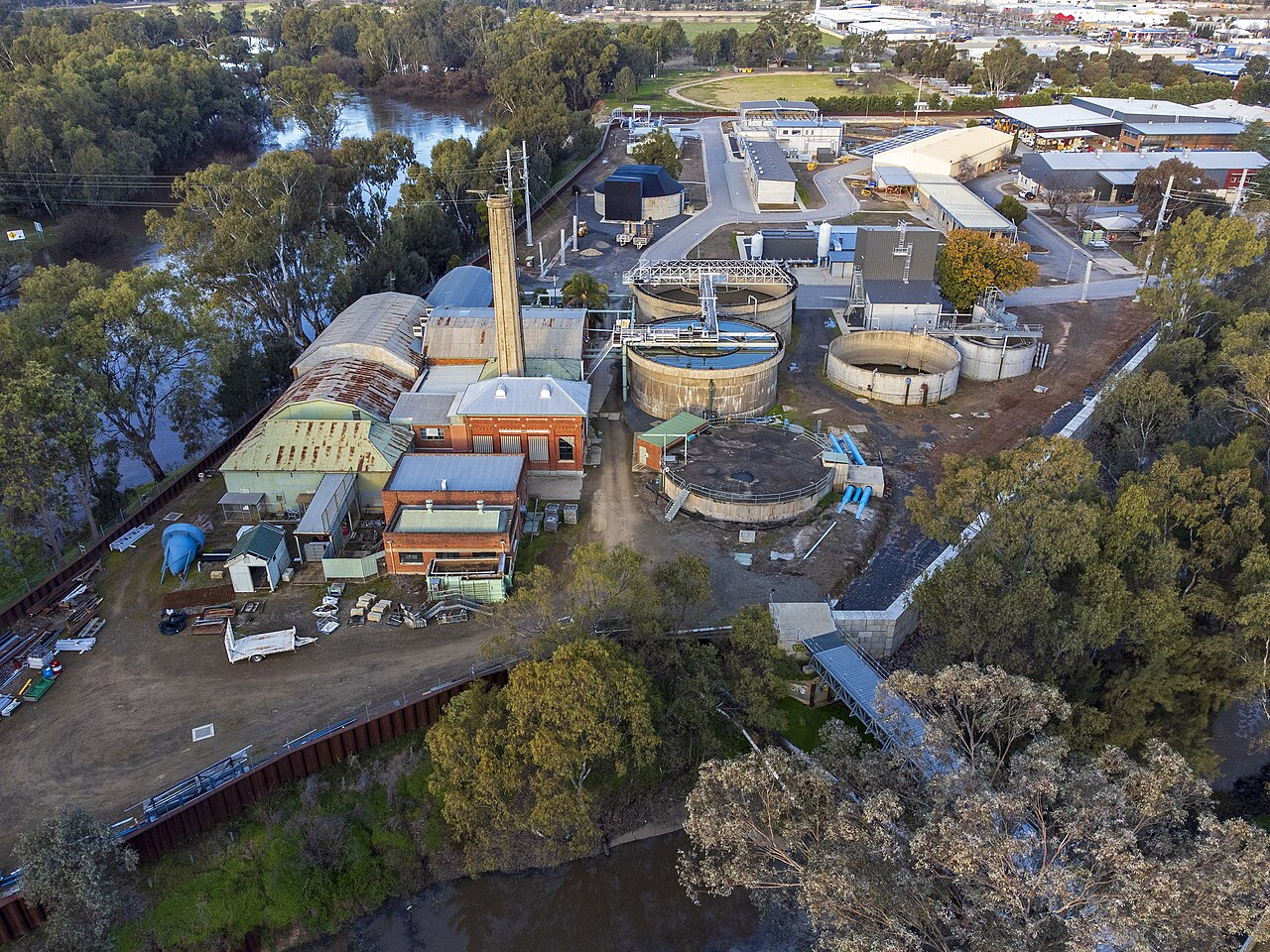
The feature image is used as an illustrative engineering photograph and should not be interpreted as a photograph of the project discussed in this article.
- Photo: Robert Myers (Bidgee)
- Source: Wikimedia Commons
- License: Creative Commons Attribution-ShareAlike 3.0 Australia
- Credit: Robert Myers (Bidgee) / Wikimedia Commons / CC BY-SA 3.0 AU
