
Article Masthead
- Category: Capital Projects & Infrastructure
- Topic: Integrated Water Utilities / Desalination
- Region: Middle East
- Signal Type: Commercial Operation Signal
- Published Date: 2026-09-07
- Original Source Date: 2026-09-06
01 What Happened
Acwa announced on September 6 that The Red Sea destination in Saudi Arabia reached Project Commercial Operation Date for its integrated utilities platform, beginning the 25-year concession period for power, potable water, wastewater, district cooling and waste management. The platform operates without connection to the national grid. Acwa reports 340 MWac of solar generation and 1,227 MWh of battery storage. The same concession includes three SWRO plants. Acwa’s project information lists desalination capacity of up to 32,500 m³/d, while the September 6 announcement confirms a 16,000 m³/d sewage-treatment component. Treated wastewater is intended for wetland creation and irrigation. The milestone does not mean every asset first started on September 6; the new signal is formal entry of the integrated utility systems into commercial service.
02 Key Takeaways
01 The platform has formally entered commercial operation under a 25-year concession. 02 The water scope includes three SWRO plants, up to 32,500 m³/d of desalination and 16,000 m³/d of wastewater treatment. 03 Treated wastewater has defined reuse pathways while the wider utility platform operates off-grid with solar and battery storage.
03 Why It Matters
The engineering value lies in integration. SWRO creates a major electrical load; wastewater reuse reduces potable demand but requires reliable storage and end use; and the energy system must support pumps, membranes, aeration and cooling without grid backup. Designing these systems separately can create overcapacity or new bottlenecks. The Red Sea therefore offers a useful model for remote resorts, islands, mining developments and industrial campuses where water and energy planning must increasingly be solved together.
04 ATLAS Engineering View
For ATLAS, the headline is not simply three desalination plants. Source water, potable supply, wastewater treatment, reuse and power reliability are managed under one long-term concession. The published 32,500 m³/d capacity is not enough to infer recovery, pretreatment configuration or specific energy consumption. Likewise, reliable reuse of 16,000 m³/d will depend on seasonal demand, storage, salinity, nutrients and treatment stability. In an off-grid system, resilience analysis must consider system-wide failure modes rather than the reliability of individual plants alone.
05 Sources
Image Source and License
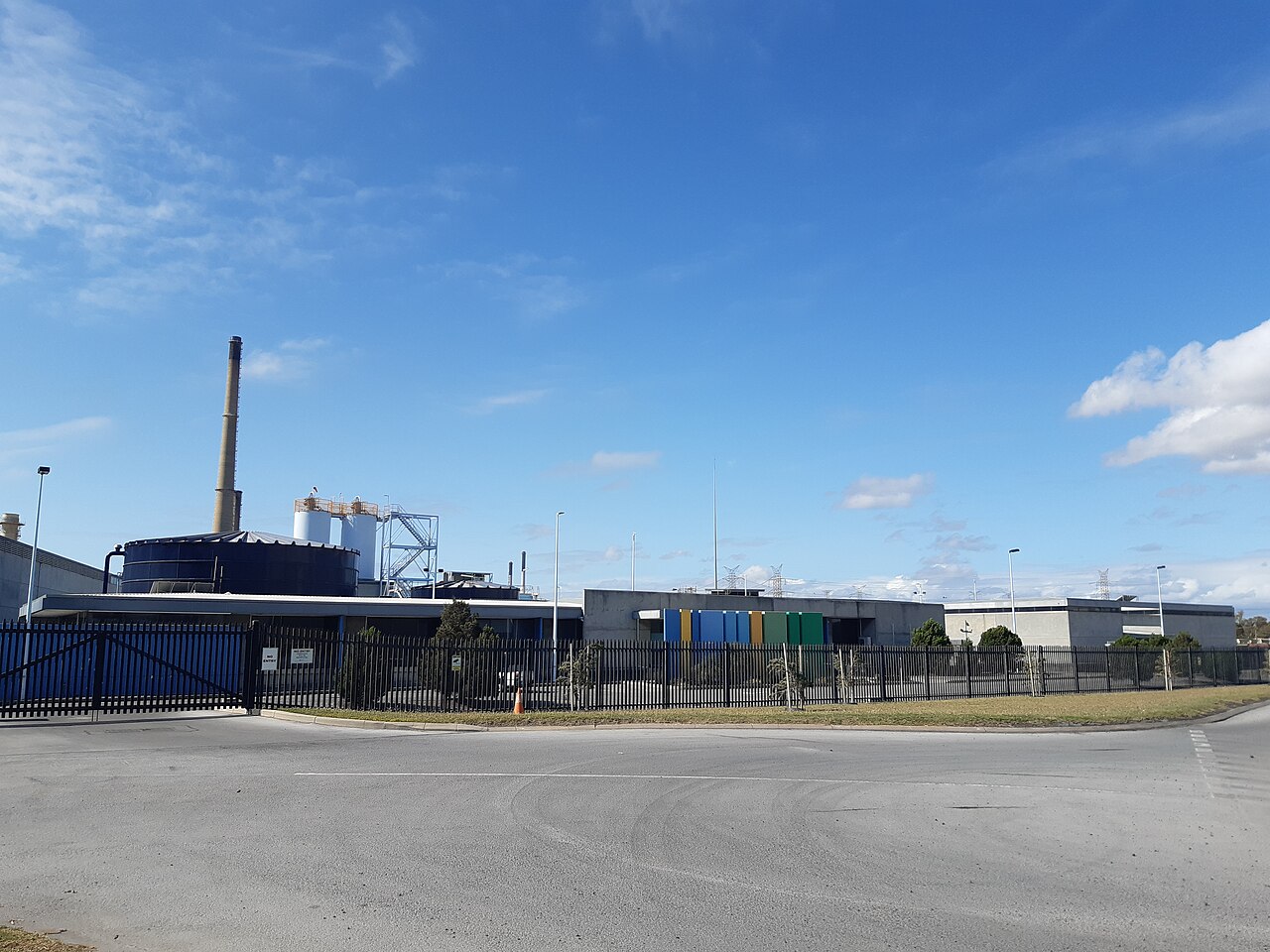
The feature image is used as an illustrative engineering photograph and should not be interpreted as a photograph of the project discussed in this article.
- Photo: Calistemon
- Source: Wikimedia Commons
- License: Creative Commons Attribution-ShareAlike 4.0 International
- Credit: Calistemon / Wikimedia Commons / CC BY-SA 4.0
