
Executive Summary
A persistent engineering misconception in acid mine drainage (AMD) treatment is to treat “pH has reached the target” as roughly equivalent to “pollutants have completed thermodynamic precipitation, kinetic transformation, solid–liquid separation, and the total-metal concentration in the final compliance sample is below the permit limit.” These four conditions are not equivalent. Lime neutralization can consume acidity very effectively and often removes Fe(III), Al, and portions of Cu, Pb, and other metals rapidly. But for Mn(II), Zn, Cd, different As oxidation states, sulfate, and large populations of submicron Fe/Al/Mn colloids, reaching the target pH is only the beginning of the reaction rather than the end of treatment. Thermodynamic models such as PHREEQC can predict saturation indices, aqueous complexes, and potential mineral phases, but without explicit kinetic, surface-complexation, nucleation, and residence-time constraints they cannot guarantee that those phases have actually formed and settled in a real reactor. USGS documentation itself separates aqueous speciation, mineral equilibrium, kinetics, and surface-complexation modules, which is precisely why “thermodynamically able to precipitate” is not the same as “removed in an engineered process.”
For that reason, the original proposition that lime neutralization “always” fails effluent verification should be reframed as “often fails to pass stringent multi-parameter effluent verification consistently.” “Always fails” is not supported by field reality. In AMD with moderate acidity, Fe, and selected heavy-metal loadings, a properly designed lime–high-density sludge (HDS) system can operate for long periods and achieve very high average removal. The real problem is that high average removal does not equal high statistical compliance frequency. Roughly 3,500 days of operating data from the large Grootvlei HDS system provide a useful example. Average influent Fe was about 142 mg/L and average treated Fe about 0.753 mg/L, corresponding to about 99.47% removal on an average-concentration basis. Yet against the site verification criterion of Fe <1 mg/L, the actual compliance frequency was only 83.4%. Suspended-solids compliance was about 80.8%, Mn <1 mg/L only 36.7%, while pH was compliant about 97.6% of the time. In other words, pH was compliant almost every day while Mn and Fe/TSS still failed frequently. This is almost a field-scale demonstration of why single-point pH control cannot represent AMD compliance control.
There is also a pronounced mismatch among the pH windows of different metals. In a 2024 study of AMD from a Zn sulfide mine, the raw water had pH 3.0, Al 445 mg/L, Fe 263 mg/L, Mn 364 mg/L, Zn 4,830 mg/L, Cd 2.8 mg/L, and dissolved sulfate of about 12,249 mg/L. After neutralization with alkaline minerals to pH 6.3, Al decreased to <0.2 mg/L and Fe to <0.1 mg/L, but Zn remained as high as 1,110 mg/L, Cd at 0.4 mg/L, and sulfate at about 1,700 mg/L. The researchers explicitly noted that metal–sulfate complexation under high-sulfate conditions helped keep Zn and Cd in solution. Only after Mn-oxide-rich solids were added and contact time was extended did Zn and Cd decrease further. Raising pH once to 6–7 may therefore essentially solve Fe/Al while completing only part of the Zn/Cd treatment task.
Mn is the most typical “kinetic tail” in lime-neutralization systems. A 2024 field mine-water study reported water containing Mn 68.7 mg/L and Zn 5.39 mg/L. Without existing Mn sludge, conventional neutralization required pH above 10 for effective Mn treatment. After Mn-bearing active sludge was added, oxidation/adsorption on γ-MnOOH surfaces and formation of Zn–Mn solids enabled Mn and Zn to reach the study’s discharge targets at pH 7–8 in about 1 h. PHREEQC and XAFS analysis further indicated important coupling between Zn and Mn oxides/spinel-type ZnMn₂O₄ phases. The engineering implication is direct: sludge recycle is not merely a way to increase settling density; it changes surface-reaction kinetics and the effective removal pathway for metals.
Arsenic illustrates why co-precipitation and post-adsorption cannot be treated as the same process. Park and co-workers compared schwertmannite, ferrihydrite, and goethite in an AMD-affected mine stream and found that co-precipitation of As(V) with newly forming schwertmannite or ferrihydrite fixed As more effectively than subsequent adsorption onto preformed mineral surfaces. Field As attenuation was associated mainly with As(V)–schwertmannite co-precipitation. Another AMD study found As concentrations of 13–208 g/kg in Fe(III) minerals, with <3% of total As belonging to a readily phosphate-exchangeable surface-adsorbed fraction, indicating that much of the As had entered newly formed Fe mineral structures. Allowing Fe to precipitate completely and then trying to “use the remaining Fe sludge to adsorb As” is therefore mechanistically different from nucleating As(V) and Fe(III) together under the appropriate Eh/pH conditions.
Solids are not the end point either. Schwertmannite is a metastable Fe(III) oxyhydroxysulfate and gradually transforms toward more stable goethite:
This aging process releases sulfate and H⁺ again while changing the binding environment of co-precipitated metals. Core studies from AMD treatment deposits found that the mobility of most elements decreased during schwertmannite-to-goethite transformation, but Pb mobility increased; Cd and Co also retained relatively high exchangeable fractions, meaning modest geochemical changes could trigger remobilization. A sample leaving a clarifier may therefore pass, while water–solid equilibria can shift again after storage, ditch transport, re-aeration, CO₂ exchange, temperature change, or sludge aging.
Sulfate reveals a more fundamental boundary of lime treatment. Chemically, lime supplies OH⁻ and Ca²⁺. It can transfer some sulfate into gypsum, but it does not destroy sulfate. Long-term geochemical evolution at Berkeley Pit shows dissolved Fe falling from roughly 1,000 mg/L to <5 mg/L while sulfate fell only from about 10,000 mg/L to about 7,000 mg/L, with gypsum precipitation acting as one of the principal sulfate-control processes. Long-term Grootvlei HDS data show the same pattern: average sulfate decreased from about 1,585 to 1,261 mg/L, only about 20% removal on an average basis. This is why a “metal treatment plant” can perform very well on metals and still create substantial EC/TDS/sulfate pressure on the receiving water.
The compliance framework also requires abandoning the idea that Europe and North America have one universal AMD discharge number. Acidic or ferruginous drainage from U.S. coal mining is regulated under 40 CFR Part 434, where new-source standards include explicit technology-based limits for total Fe, total Mn, TSS, and pH. Hard-rock mining involves 40 CFR Part 440 together with NPDES water-quality-based permit requirements. The European Union places stronger emphasis on receiving-water environmental quality standards (EQS). Under Directive (EU) 2026/805 adopted in 2026, inland-surface-water annual-average EQS values include hardness-dependent Cd of approximately ≤0.08–0.25 µg/L, Pb 1.2 µg/L, and Ni 2 µg/L. These are receiving-water EQS values, not mine-outfall concentration limits that can be applied directly. Member States must transpose the directive by 21 December 2027. The United Kingdom and Germany likewise rely more heavily on environmental permitting, basin objectives, and applicable source-category requirements than on a single table imposed on every AMD discharge.
The central engineering conclusion is therefore:
AMD compliance control should no longer be organized around three variables—lime dose, final pH, and clarifier performance—but around oxidation state, staged pH, supersaturation, nucleation surface area, effective reaction time, colloid/particle size, sludge age, and final receiving-water constraints. Lime itself is often not what fails. What fails is treating a multiphase, non-equilibrium geochemical system with aging and remobilization as though it were a simple acid–base titration.
Keywords: acid mine drainage; AMD; lime neutralization; high-density sludge; PHREEQC; schwertmannite; ferrihydrite; Mn oxidation; As co-precipitation; sulfate; colloids; effluent compliance.
Regulatory Boundaries, Data Sources, and What “Compliance” Actually Means
This article prioritizes peer-reviewed primary research, official technical reports, and regulatory texts from roughly the last two decades, with greater weight placed on work from the last ten years. Earlier sources such as Singer and Stumm are used only where later research does not replace their foundational kinetic findings. One distinction is essential: U.S. coal-mine technology-based effluent limits, EU surface-water EQS values, and U.K./German permit values are not the same statistical or regulatory concept and cannot be ranked directly as though one jurisdiction were simply “stricter.” EU EQS values primarily assess the chemical status of the receiving water, whereas numerical values under U.S. 40 CFR Part 434 are technology-based point-source benchmarks. Actual mine permits can be tightened further by receiving-water quality requirements.
| Jurisdiction / framework | Representative requirement | Regulatory nature | Practical implication for AMD treatment |
|---|---|---|---|
| U.S. coal mines, 40 CFR Part 434 new source | Total Fe: daily max 6, 30-day average 3 mg/L; total Mn: 4/2 mg/L; TSS: 70/35 mg/L; pH 6–9 | Technology-based outfall standard | Low dissolved Fe is not enough; colloidal Fe entering the total-metal sample can still fail compliance, and Mn often becomes the controlling parameter. |
| U.S. hard-rock mining | 40 CFR Part 440 + NPDES permits; permits may impose tighter water-quality-based limits | Source-category + water-quality permit | There is no single nationwide Fe/Mn table applicable to every hard-rock AMD discharge. |
| European Union | Inland-water AA-EQS under the 2026/805 revision: Cd ≤0.08–0.25 µg/L depending on hardness; Pb 1.2 µg/L; Ni 2 µg/L; corresponding MAC-EQS also apply | Receiving-water EQS, not direct outfall limits | Outfall requirements must be back-calculated from permits, dilution, and no-deterioration objectives; trace-metal control can be orders of magnitude more demanding than conventional mg/L-scale metal precipitation. Transposition is due by 21 Dec 2027. |
| United Kingdom | Environment Agency permitting + water-body objectives; mine-waste drainage also managed through permits | Site-specific | The South Crofty permit scheme, for example, uses HDS for heavy metals and an additional hydrogen-peroxide step for As, demonstrating that real permitting does not treat lime/HDS as a universal final barrier. |
| Germany | WHG permitting framework + applicable minimum requirements under the Abwasserverordnung and basin objectives | Permit/source-category combination | The federal framework reviewed here does not provide a single Fe/Mn table equivalent to U.S. Part 434 for all AMD; each project must return to its permit and applicable annex. |
This distinction changes engineering design. For example, if treated mine water contains Cd at 0.4 mg/L, dividing that value mechanically by the EU 2026/805 inland-water annual-average Cd EQS of 0.08–0.25 µg/L gives a concentration ratio of roughly 1,600–5,000. But this comparison cannot be interpreted as “the outfall must achieve 0.08 µg/L.” It only shows that where discharge volume is large, the receiving river is small, or background concentration is already near the EQS, reducing Cd merely below the traditional mg/L range may still fail to protect the receiving-water quality objective. This is why European projects increasingly need combined outfall–river mass-balance analysis rather than focusing only on treatment-plant outlet pH. The 0.4 mg/L Cd case comes from the 2024 Zn-mine AMD experiment, while the EU values come from the 2026 revised directive.
The South Crofty permit case in the United Kingdom deserves particular attention. The treatment system is permitted for up to about 25,000 m³/d of mine-water treatment and discharge. Its core process uses HDS for heavy-metal removal, while a hydrogen-peroxide step is explicitly included for arsenic and monitoring is required to prevent deterioration of the Red River. This does not demonstrate that HDS is ineffective. It demonstrates the opposite: mature regulatory practice typically assigns HDS the acidity and bulk-metal duty it handles well, then adds oxidation or polishing for As and trace contaminants.
The U.S. coal-mine focus on “total Fe/total Mn” exposes another issue. If the clarifier effluent contains newly formed 0.1–1 µm Fe(OH)₃, schwertmannite, or Mn-oxide colloids, dissolved Fe after 0.45 µm filtration may already be low, while an unfiltered, digested total-metal sample still fails. A laboratory statement such as “dissolved metal removal >99%” and an outfall result of “total metal pass/fail” can therefore reach opposite conclusions. EPA identifies Fe, Mn, TSS, and pH as Part 434 control parameters, while the Grootvlei record shows Fe and suspended-solids compliance frequencies both lagging behind pH. Together, these provide strong engineering evidence that colloid and solids separation are part of compliance, not merely downstream housekeeping.
Accordingly, “lime-treatment compliance failure” in this article includes at least three distinct phenomena. First is chemical failure, where the target pollutant remains genuinely dissolved. Second is kinetic failure, where thermodynamics favor a solid phase but oxidation, nucleation, crystallization, or adsorption have not completed within the available residence time. Third is separation failure, where the pollutant has entered a solid but leaves the clarifier as a colloid or fine particle. Real plants often experience all three at once, and a traditional final pH probe cannot distinguish them. PHREEQC’s separate equilibrium, KINETICS, and SURFACE capabilities reflect the same need to solve these process layers separately.
Speciation Control, Mineral Transformation, and the Co-Precipitation Reaction Network
AMD chemistry commonly begins when pyrite and other sulfides are exposed to O₂ and water. A simplified reaction useful for understanding engineering acid load is:
Subsequent Fe(II) oxidation is:
Fe(III) hydrolysis and precipitation can then release additional acidity:
Fe(III) can also continue oxidizing pyrite, producing the familiar autocatalytic acid-generation cycle. The classic Singer–Stumm experiments established Fe(II) oxidation as a key rate-controlling step in AMD formation. Abiotic Fe(II)–O₂ oxidation is slow at low pH and accelerates sharply as pH rises, so whether Fe enters a neutralization tank as Fe²⁺ or Fe³⁺ materially affects instantaneous lime demand, oxidation-basin sizing, and the point at which Fe sludge forms.
For homogeneous Fe(II) oxidation near neutral conditions, the typical pH-dependent structure can be expressed as:
The most important engineering feature of this form is not one fixed value of , but the term. A one-unit change in pH can alter this factor by roughly two orders of magnitude. Field temperature, microorganisms, catalytic surfaces, ionic strength, and O₂ mass transfer all shift the actual rate away from an ideal homogeneous model. Oxidation-basin design therefore cannot substitute a simple “aeration on/off” status for actual Fe(II)/total-Fe measurement.
The reaction of lime itself is simple:
Complexity begins after OH⁻ enters AMD. For a divalent metal:
But the real is not the “total Zn” or “total Cd” shown on an analytical report. High-sulfate AMD also contains complexes such as:
along with hydroxo complexes, carbonate complexes, and surface complexes on Fe/Al colloids. Precipitation depends on ionic activity, not analytical concentration:
and:
means only that the solution is thermodynamically supersaturated; it does not mean precipitation has formed within the process residence time. The ionic strength of high-sulfate AMD can drive far from unity, so simply inserting laboratory mg/L concentrations into textbook expressions can misestimate precipitation pH. PHREEQC therefore provides ion-association, Pitzer, and SIT activity models.
In an Fe–Al–Mn–Zn–Cd system, no fixed “metal precipitation pH table” can apply to all AMD because initial concentrations, oxidation states, sulfate, Ca, CO₂, temperature, and existing solids all alter the effective window. Real data nevertheless show the relative mismatch clearly. In the Zn-mine AMD described above, raising pH from 3.0 to 6.3 reduced Fe from 263 to <0.1 mg/L and Al from 445 to <0.2 mg/L—essentially complete Fe/Al removal—while Zn still remained at 1,110 mg/L and Cd at 0.4 mg/L. In another study, conventional Mn removal without active Mn sludge generally required pH >10, while introducing γ-MnOOH-type surfaces shifted the effective window to pH 7–8. “Optimum pH” is therefore a function of each metal, solid phase, and kinetic pathway.
Al further complicates high-pH operation because it is not only a precipitate. It also participates in amorphous Al(OH)₃, sulfate-bearing Al phases, and mixed Fe–Al solids. Hydrobasaluminite-type aluminum hydroxy-sulfate phases common in AMD have their own formation and dissolution kinetics. Al phases formed at low pH do not necessarily retain the same structure under later high-pH, high-Ca conditions, and sludge aging can change the way they encapsulate or bind Zn, Cu, Cd, and other elements. AMD mineral studies have shown that Al phases, like schwertmannite, can be major controls on water-chemistry evolution.
Arsenic is especially sensitive to Eh and the timing of Fe-mineral formation. As(V) can be strongly fixed through structural incorporation and inner-sphere surface complexation as schwertmannite/ferrihydrite form. Park and co-workers’ experiments and field XANES results indicate that co-precipitation generally outperforms adsorption onto minerals after they have already formed. Carlson and colleagues isolated ochre precipitates from Finnish AMD containing about 5.5–69.8 g/kg As, dominated by schwertmannite, ferrihydrite, and goethite. At higher As/Fe molar ratios, As can even disrupt schwertmannite structure and form poorly crystalline Fe(III) hydroxy-arsenate phases. As is therefore not simply a trace impurity “stuck to the surface of Fe sludge”; it can directly affect Fe-solid nucleation and crystal structure.
Another primary study in 2023 quantified this logic further: at about pH 3.5–4.5 and Fe/As ≥20, co-precipitating As with Fe(III) could achieve ≥95% As removal, while preformed schwertmannite showed distinctly different post-adsorption behavior toward As(III) and As(V). For As-bearing AMD, Fe oxidation and As oxidation should therefore be designed as a coordinated reaction stage, not treated as something that can be corrected by measuring total As at the final clarifier and adding more lime.
Mn illustrates a different mechanism. Near neutral pH, Mn(II) removal by homogeneous oxidation and Mn(OH)₂ precipitation alone is often too slow. Once Mn(III/IV)-oxide surfaces exist, however, adsorption, surface-catalyzed oxidation, and formation of new Mn oxides create positive feedback. Furukori et al. (2024), using PHREEQC and XAFS, found γ-MnOOH surface complexation to be important and showed that Zn could enter Zn–Mn solid phases. Recycled “old Mn sludge” therefore acts as a catalyst and adsorbent inside the reactor rather than as inert waste.
Sulfate and Ca form another reaction path:
The more lime added, the higher the Ca activity and the easier it is to reach gypsum saturation. Once gypsum equilibrium is reached, however, residual sulfate is controlled by Ca, ionic strength, temperature, and water volume and will not continue falling linearly just because “a little more lime” is added. Berkeley Pit and Grootvlei both show the same pattern: Fe can decline by more than two orders of magnitude while SO₄²⁻ remains in the g/L range.
The overall reaction network can be summarized as follows:
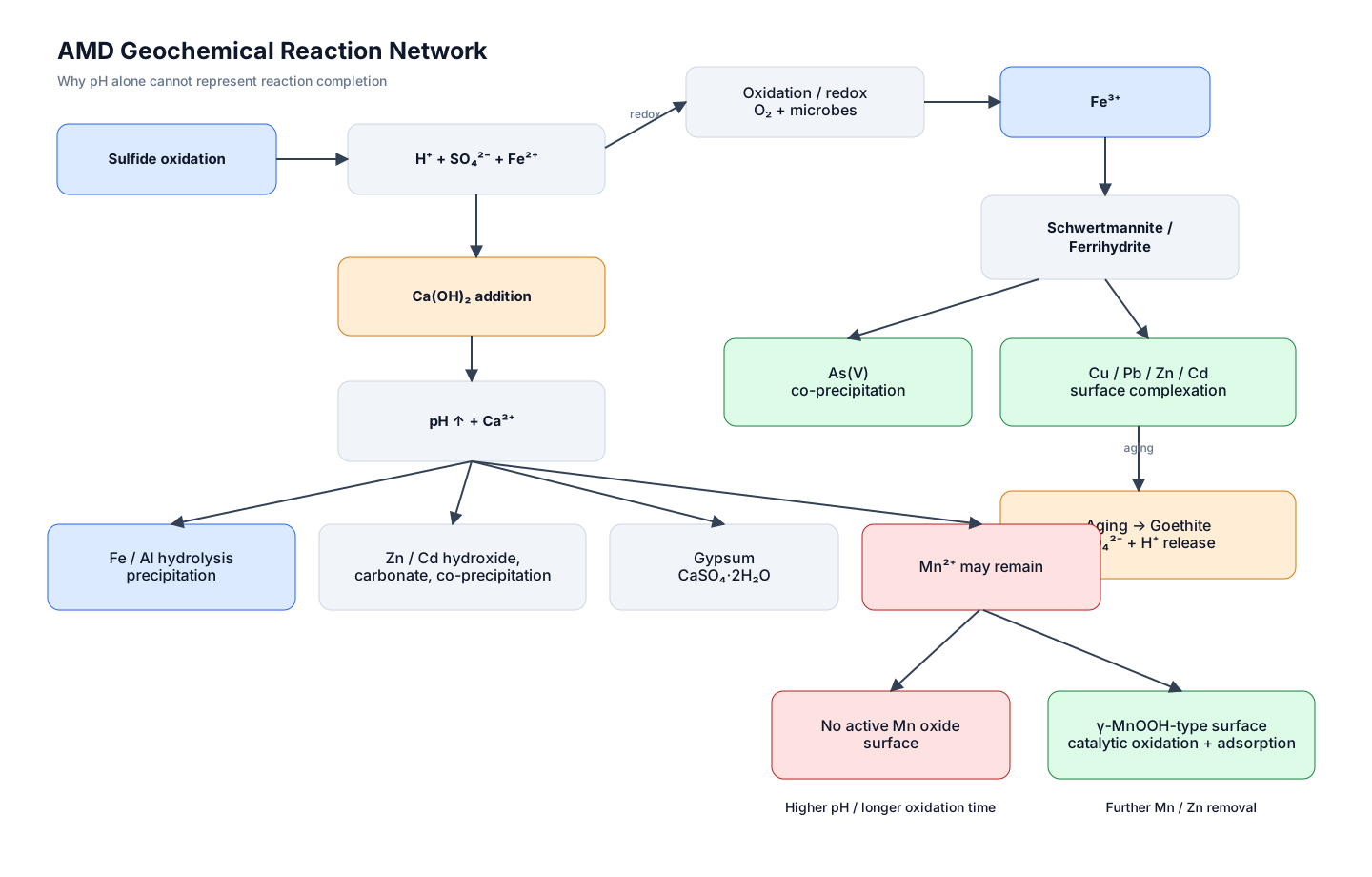
Mineral aging is one of the elements most easily overlooked in conventional design. Kim and Kim directly observed schwertmannite transforming progressively to goethite with depth in an AMD-treatment sediment core. Pb was strongly fixed in initial schwertmannite but became more mobile after phase transformation, while Cd and Co retained higher exchangeable fractions than many other metals. Sludge stability must therefore be treated as part of water-treatment compliance, rather than something that becomes irrelevant once the sludge leaves the filter press.
Why Conventional Lime Neutralization Frequently Fails Effluent Verification
The first failure mode is treating the pH setpoint as a measure of reaction completion. A controller reading pH 8.0 tells the operator only that H⁺ activity near the measurement point is within the corresponding range. It does not indicate whether Fe²⁺ has fully oxidized, Mn²⁺ has completed surface-catalyzed oxidation, ZnSO₄⁰ has dissociated and nucleated, As is in an oxidation state favorable for Fe co-precipitation, or newly formed 100 nm Fe colloids have grown into settleable flocs. A thermodynamic PHREEQC SI cannot answer these questions automatically either unless kinetics and surface reactions are included explicitly.
The second failure mode is asking one pH stage to serve every element simultaneously. For Fe/As, deliberately forming high-surface-area Fe(III) solids at lower pH may be advantageous. Al, Cu, Pb, Zn, Cd, and Mn each have different hydrolysis, complexation, and co-precipitation windows. Driving the entire system to pH 10–11 for Mn means high lime consumption, higher Ca loading, more gypsum, more sludge, and later pH readjustment. Holding the endpoint at pH 6.5–7.0 to save reagent, on the other hand, can leave Mn and portions of Zn/Cd as the tailing contaminants. Furukori’s results show that active Mn sludge can shift the effective Mn treatment window from the conventional >10 range to about 7–8. The correct response is therefore not simply to search for one “plant-wide optimum pH,” but to change the reaction pathway.
The third failure mode is insufficient oxidation capacity rather than insufficient alkalinity. Treatment of Fe²⁺, As(III), and Mn²⁺ all depends on oxidation state. More Ca(OH)₂ adds OH⁻ but does not create oxygen-transfer capacity. If a reaction basin’s HRT drops from 60 min to 20 min at high flow, the pH-control valve may still return the measured pH rapidly to setpoint, but oxidation, nucleation, and crystal growth have no equivalent “fast compensation.” The Singer–Stumm framework and recent Mn-sludge research both show that oxidation kinetics must be treated as an independent design variable.
The fourth failure mode is sulfate complexation lowering free-metal activity relative to total concentration. At total Zn concentrations of thousands of mg/L, a portion of Zn may exist as ZnSO₄⁰ and other complexes; precipitation equilibrium responds to free Zn²⁺ activity. Two laboratory reports both showing “Zn = 100 mg/L” can therefore produce distinctly different neutralization curves at 500 mg/L versus 10,000 mg/L sulfate. In the 2024 Zn-mine AMD test, pH 6.3 removed Fe/Al almost completely while 1,110 mg/L Zn remained, and the authors identified high-sulfate complexation as an important contributor to persistent dissolved Zn/Cd.
The fifth failure mode is missing the co-precipitation window. If As(V), Pb, or other trace metals are present while fresh Fe/Al oxides are forming, they can enter nuclei or form strong inner-sphere complexes on high-surface-area fresh solids. If Fe is precipitated and settled first, then trace pollutants are exposed only to older, lower-surface-area solids, “post-adsorption capacity” can be very different. Park et al.’s As experiments clearly demonstrate the advantage of co-precipitation over after-the-fact adsorption.
The sixth failure mode is equating precipitation with removal. Chemical reactions only transfer pollutants from the aqueous phase to a solid. Actual outfall removal still requires collision, flocculation, growth, settling, or filtration. Low-crystallinity ferrihydrite, schwertmannite, and Al hydroxide precipitates often have high surface area and high hydration. Those properties are advantageous for trace-metal adsorption but are also why these solids are difficult to dewater and settle. HDS recycles sludge to provide nuclei, increase solids concentration, and modify floc structure precisely to address this weakness. Mackie and Walsh’s HDS tests likewise showed that solids loading and alkaline reagent can materially change sludge volume, moisture content, and compression-settling behavior.
The physical basis of particle settling can be illustrated by Stokes’ relationship:
Settling velocity is proportional to the square of particle diameter. The same mass of metal solids can therefore lose orders of magnitude of settling performance when particle size shifts from tens of micrometres to submicron colloids. The real operating variable is not simply “how much Fe has precipitated,” but “how much Fe has entered particles large enough to separate.” The long-term Grootvlei record, where neither Fe nor TSS achieved 100% compliance, illustrates how solids-separation variability can become the final compliance barrier.
The seventh failure mode is that sulfate/TDS is a different pollution problem. Conventional lime/HDS primarily neutralizes acidity and precipitates metals. It does not turn high-sulfate AMD into low-TDS water. A BACI study around start-up of HDS treatment in South Africa’s Eastern Basin found that although Fe and other indicators improved, downstream conductivity, sulfate, Na, Mg, Cl, and other dissolved constituents continued to exert water-quality pressure. The significance is that “successful metal control” and “overall water-quality restoration” are not synonymous.
The eighth failure mode is delayed remobilization during mineral aging. Fresh schwertmannite can immobilize large amounts of As, Pb, and other elements, but it is not the final stable phase. Transformation toward goethite produces H⁺, releases structural SO₄²⁻, and redistributes trace metals. If clarifier sludge is recycled heavily, aging can occur inside the treatment system; if sludge is stored long term, it may become a secondary AMD/leachate source. Kim and Kim’s observations of changing Pb, Cd, and Co mobility imply that a same-day TCLP result or short-term water sample cannot fully represent geochemical stability over decades.
The ninth failure mode is the statistical illusion created by instantaneous loads versus average design values. Many AMD plants estimate reagent and sludge loads from “average flow × average concentration,” while actual exceedances are driven by wet-season peak flow, acidity pulses, pump switching, sudden inflow from stratified pit water, falling temperature, or interrupted sludge recycle. Grootvlei is particularly instructive: average effluent Fe was already below the 1 mg/L site target, yet about 16.6% of samples did not meet that target. A design average is not a permit-compliance probability.
A typical single-stage failure path can therefore be shown as:
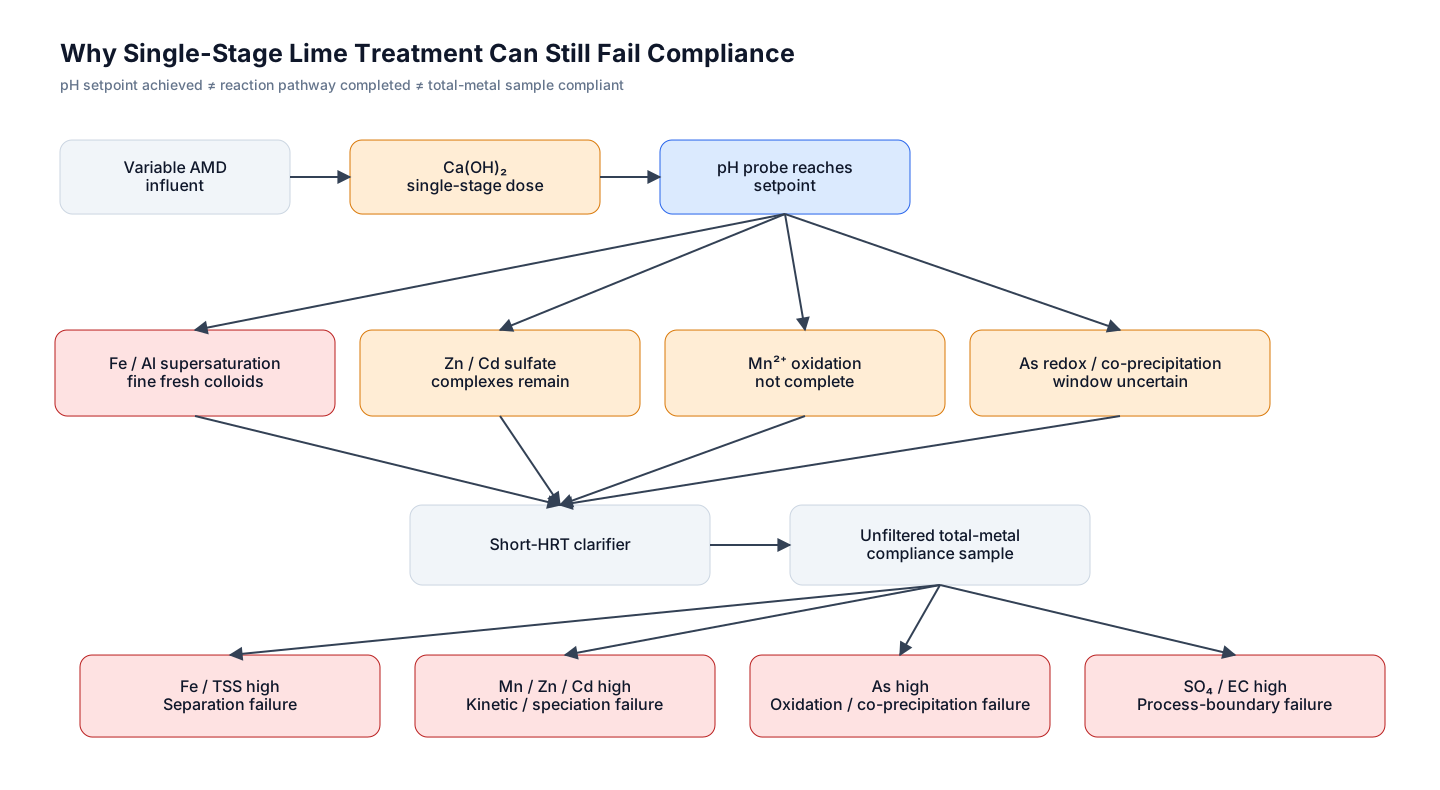
From this perspective, the largest weakness of conventional lime treatment is not that its reaction capacity is inherently inadequate. It is that a complex multiphase system is frequently designed around only one feedback variable. The feedback variable is pH, while the state variables that actually determine compliance include at least Fe²⁺/total Fe, As(III)/As(V), Mn²⁺, DO, ORP, sulfate, Ca, alkalinity, solids concentration, particle-size distribution, sludge age, and hydraulic residence time.
Field Data, Mass Balance, Kinetics, and PHREEQC Reproduction
The following table summarizes representative real data sets. These cases come from different ore bodies, countries, and study purposes and should not be treated as a direct competition among processes. Their value lies in the repeated mechanisms they reveal.
| Setting | Raw / initial state | Treatment and conditions | Effluent / final state | Main mineral or mechanistic evidence | Interpretation |
|---|---|---|---|---|---|
| Zn sulfide mine AMD, 2024 | pH 3.0; Al 445, Fe 263, Mn 364, Zn 4,830, Cd 2.8, SO₄ about 12,249 mg/L | Neutralized with alkaline mineral to pH 6.3 | Al <0.2; Fe <0.1; Zn 1,110; Cd 0.4; SO₄ about 1,700 mg/L | Subsequent SEM-EDS showed Mn oxides in Mn-rich solids associated with improved adsorption performance | Fe/Al were almost completely removed while substantial Zn/Cd remained; longer contact with Mn solids allowed further removal. |
| Mine drainage X, 2024 | Mn 68.7; Zn 5.39 mg/L | Neutralization compared with and without Mn sludge | With sludge, study targets achieved at pH 7–8 in about 1 h; conventional no-sludge treatment required pH >10 for Mn | γ-MnOOH surface complexation; XAFS supports ZnMn₂O₄-type Zn-bearing solids | Demonstrates that surface catalysis and sludge seeding can change the “effective precipitation pH” of Mn. |
| Long-term Grootvlei HDS field data | Average flow about 92 ML/d; pH about 5.6–6.9; Fe average 142; Mn 3.6; SO₄ 1,585 mg/L | HDS, about 3,500 d of long-term operation | Fe average 0.753; Mn 0.667; SO₄ 1,261 mg/L | Long-term operating data | Fe <1 mg/L compliance 83.4%; Mn <1 mg/L 36.7%; TSS about 80.8%; pH about 97.6%. |
| Berkeley Pit geochemical evolution | Around 2002 dissolved Fe about 1,000; SO₄ about 10,000 mg/L; pH about 2.5 | Long-term oxidation, Fe precipitation, gypsum formation | By 2018 Fe <5 mg/L; pH about 4.1; SO₄ still about 7,000 mg/L | Fe phases including schwertmannite and gypsum | Fe can be strongly immobilized while SO₄ remains at g/L scale. |
| As-affected mine stream | As and Fe minerals coexist in AMD | Natural formation of Fe(III) minerals | Strong attenuation of aqueous As | Schwertmannite/ferrihydrite co-precipitation; goethite adsorption; XANES | As(V) co-precipitation outperforms post-adsorption. |
| Aging sludge in AMD treatment system | Schwertmannite plus Pb, Cd, Co, As, and other elements | Progressive transformation to goethite with depth/time | Element mobility redistributed | XRD / sequential extraction | Pb mobility increases; Cd/Co retain relatively high exchangeable fractions. |
Examples of imaging evidence. Teams performing engineering review should consult images in the primary papers rather than relying on secondary review graphics. SEM-EDS images in Piñon-Flores et al. (2024) compare different Mn-rich particles and associate Mn-oxide enrichment with improved Zn/Cd treatment. Carlson et al. (2002) reported broad XRD features near 0.30 and 0.16 nm for poorly crystalline Fe(III) hydroxy-arsenate under high As/Fe conditions. Park et al. (2016) used XANES to distinguish As(V) relationships with Fe minerals in AMD precipitates, while Furukori et al. (2024) used XAFS to verify Zn–Mn solid phases. For engineering design, SEM/XRD/XAS evidence can be more informative than total-metal removal alone because it identifies the phase into which a pollutant has entered and therefore whether remobilization is plausible.
Using the original Zn-mine AMD data, the residual fraction after neutralization only to pH 6.3 is:
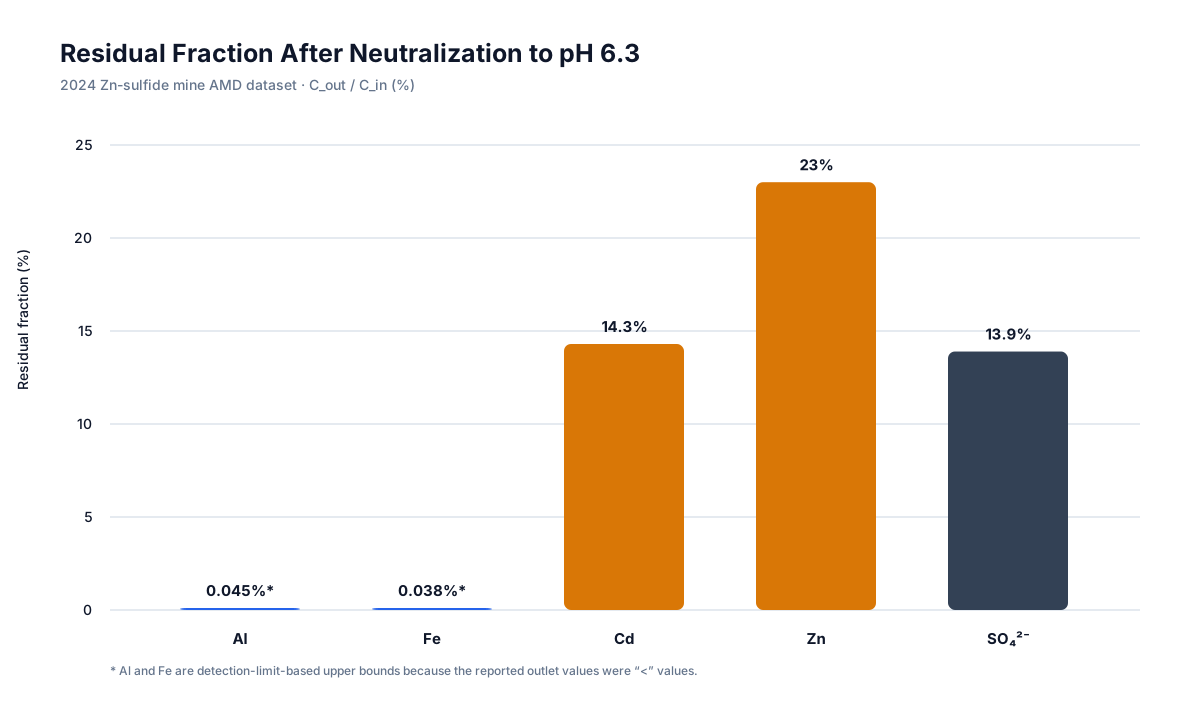
| Constituent | Residual fraction after neutralization to pH 6.3, (%) |
|---|---|
| Al | 0.045* |
| Fe | 0.038* |
| Cd | 14.3 |
| Zn | 23.0 |
| SO₄²⁻ | 13.9 |
* Al and Fe values are upper bounds calculated using the reported detection limits.
Al and Fe were reported as “<” values, so 0.045% and 0.038% are detection-limit-based upper bounds. Cd remained at about 14.3%, Zn about 23.0%, and SO₄²⁻ about 13.9%. The point is not that every AMD source follows this same curve, but that at one pH endpoint the degree of treatment completion can differ by three to four orders of magnitude among constituents. All ratios are calculated from the concentrations reported in the original study.
Numerical example of lime demand. Using the same real AMD, assume all Fe ultimately precipitates as a Fe(III) hydroxide phase, Al as a trivalent hydrolysis phase, and Mn/Zn/Cd are estimated on a divalent-hydroxide OH⁻ equivalent basis. The theoretical OH⁻ demand per litre includes at least:
The free H⁺ corresponding to pH 3.0 is about 1 mmol/L. For the items above alone:
Each mole of Ca(OH)₂ supplies 2 mol of OH⁻, so:
Using a Ca(OH)₂ molar mass of 74.09 g/mol:
If industrial lime is assumed to have 90% effective purity and a provisional 15% engineering margin is added:
This is not a design chemical dose. It is an order-of-magnitude demonstration. It excludes additional acidity from HSO₄⁻/sulfuric-acid species, CO₂, buffering, gypsum formation, metal complexation, reagent slaking efficiency, mixing dead zones, and the supersaturation needed at the final operating state. More importantly, the free H⁺ implied by pH 3 is only about 1 mmol/L while the metal-precipitation OH⁻ equivalent in this high-Zn/Al/Fe water is about 225 mmol/L. Estimating lime demand from raw-water pH alone can therefore underestimate the true neutralization–precipitation demand severely. The AMD concentrations come from the 2024 field study; the equivalent calculation is performed here from those data.
Another long-term mass balance is even more cautionary. Grootvlei had an average L/d, with Fe falling from 142 to 0.753 mg/L. On an average-concentration basis:
Average effluent Fe load was approximately:
Despite 99.47% removal, field Fe compliance was only 83.4%. In a high-influent-concentration project, “>99% removal” is therefore not the final performance metric to celebrate. The key questions are the P95/P99 effluent concentration and the operating state associated with exceedance peaks.
Using the same average values, SO₄²⁻ fell from 1,585 to 1,261 mg/L:
while the effluent sulfate mass flow was approximately:
or about 116 t/d SO₄²⁻. This is the real mass-balance meaning of conventional HDS being “excellent at metals but still carrying a very large salt load.” This calculation uses average flow × average concentration and cannot replace cumulative loads calculated from daily flow in the original work; it is included only to show order of magnitude.
Kinetic example for residence time. Piñon-Flores et al. reported that at a lower Mn-solid addition ratio, reducing Zn from about 1,110 mg/L to about 10 mg/L required roughly 45 h. Increasing the solid dose reduced the time needed to reach 5–7.5 mg/L to about the 1 h scale. If the 45 h endpoint from the lower-dose condition is used only to construct a first-order apparent model for engineering sensitivity analysis:
then:
The resulting theoretical removal series is:
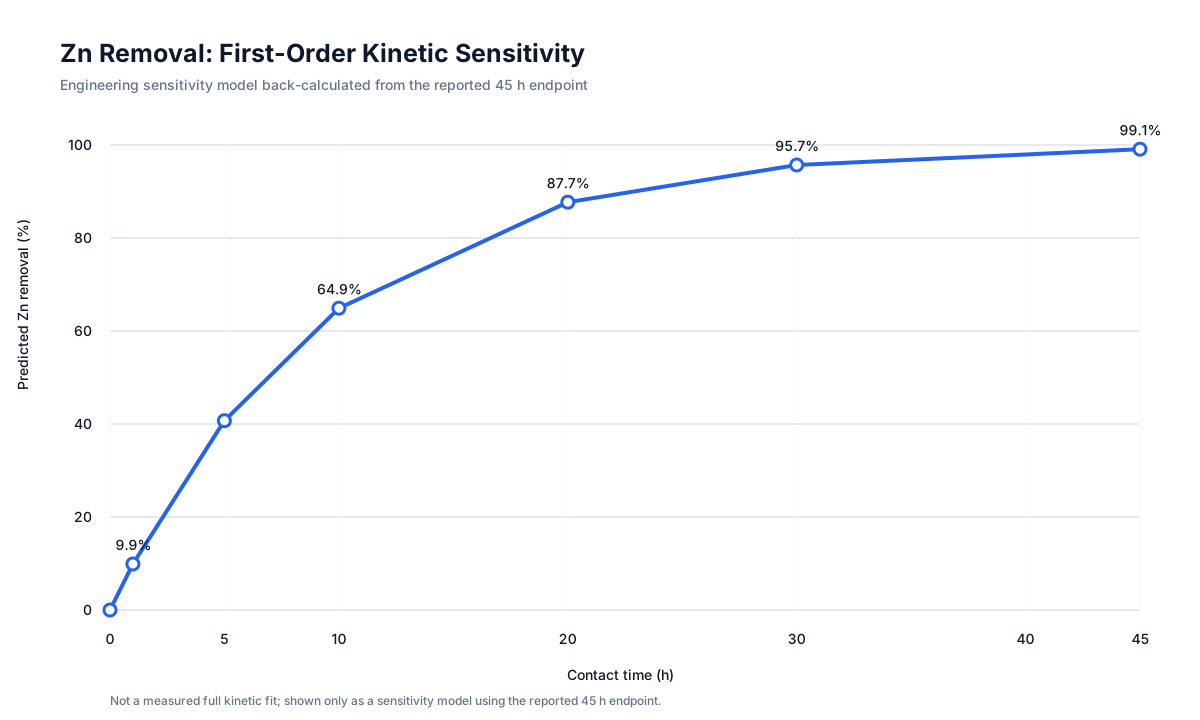
| Contact time (h) | Predicted Zn removal (%) |
|---|---|
| 0 | 0.0 |
| 1 | 9.9 |
| 5 | 40.7 |
| 10 | 64.9 |
| 20 | 87.7 |
| 30 | 95.7 |
| 45 | 99.1 |
This series is not the authors’ measured full kinetic fit. It is a single-parameter engineering sensitivity model back-calculated here from their real 45 h endpoint. Its purpose is to show that if a pollutant has an apparent reaction time constant of hours or tens of hours, cutting clarifier HRT from 2 h to 30 min cannot be compensated by more precise pH control. The original time endpoint comes from the 2024 study.
For more general mineral nucleation/dissolution, a form such as the following can be used:
or, for dissolution:
where is reactive surface area. This explains why sludge recycle matters so much. Adding older sludge may not materially change aqueous equilibrium constants, but it can increase substantially and therefore increase the apparent reaction rate at the same supersaturation. The Mn-sludge experiments illustrate this mechanism.
PHREEQC reproduction framework. The following input uses the 2024 Zn-mine AMD as representative raw water and follows a minteq.v4.dat lime-titration approach similar to that used by Furukori and co-workers. Fe is simplified here as already oxidized Fe(III), so an actual site model must replace this assumption with measured Fe²⁺/total Fe. The code demonstrates the workflow; it does not replace site-specific calibration. PHREEQC can calculate aqueous speciation, mineral saturation, mineral equilibrium, and can then be extended with KINETICS and SURFACE modules.
The first model layer should answer how pH, ionic strength, free-ion activity, and mineral SI change as lime is added. It should not be used to claim that a given step has reached the real outfall concentration. A second layer should add Fe/Mn oxidation KINETICS; a third should add Hfo/ferrihydrite or Mn-oxide SURFACE complexation; a fourth should use jar tests or site time series to infer , effective surface area, and sludge age. Only then should the model be used to predict P95/P99 effluent risk under different flow, temperature, recycle, and pH strategies. USGS examples for strong/weak Hfo sites and pH-dependent surface complexation provide a direct implementation framework.
At high-sulfate sites, ideal activity coefficients should not be used blindly. PHREEQC Version 3 provides Pitzer and SIT approaches for higher ionic strength. For AMD containing 1–10 g/L or more SO₄²⁻, the minimum reasonable practice is to compare database/activity-model sensitivity and check charge balance plus Ca–SO₄–Al–Fe speciation. Otherwise, the model may appear precise to three decimal places while being physically detached from the real system.
Technical–Economic Comparison of Intensification and Alternative Processes
The mechanisms above show that the most effective retrofit is usually not simply to “abandon lime,” but to demote lime from a supposed universal treatment unit to the primary acidity/bulk-metal unit, then add only the functions needed for oxidation, Mn, As, Zn/Cd, sulfate, or trace-compliance polishing. EPA’s Mining-Influenced Water (MIW) treatment guide likewise describes treatment as combinations of technologies and notes that total costs for integrated systems are generally higher than the line-item cost of one technology.
| Technology | Best suited problem | Main advantages | Main risks / limitations | Public cost scale / case |
|---|---|---|---|---|
| Pre-oxidation/aeration + lime | Fe²⁺ and part of As oxidation-state control; reduces oxidation lag in neutralization | Simple equipment; moves oxidation upstream of clarification | Abiotic Fe²⁺ oxidation is slow at low temperature and low pH; Mn²⁺ may still be slow | Often a low-to-moderate-cost first retrofit for existing plants; energy depends on O₂ transfer. Fe kinetics are grounded in Singer–Stumm. |
| Staged pH + HDS sludge recycle | Separate Fe/As, Al/multivalent metals, Zn/Cd, and Mn duties | Uses different precipitation windows; increases seed surface area; improves sludge density | More complex control; requires recycle and multiple reaction zones | EPA’s 2014 MIW guide gives no universal traditional lime/HDS cost, so a generic $/m³ value should not be invented; economics must be site-specific. |
| Mn-oxide seeding/recycle | Mn, Zn | Can shift the effective Mn-removal window downward; avoids extreme pH | Active surfaces age; sludge composition must remain suitable | 2024 case achieved study targets around pH 7–8 in about 1 h, whereas no-seed conventional treatment required pH >10. |
| Oxidant + Fe co-precipitation | As, especially As(III)/As(V) control | Immobilizes As as fresh Fe phases form | Oxidant cost; Fe/As, ORP, and sludge stability must be controlled | South Crofty uses HDS + H₂O₂ for As; experiments show ≥95% co-precipitation removal at Fe/As ≥20 and pH 3.5–4.5. |
| Lime–soda ash/carbonate adjustment | Hardness, selected metals, Ca control; can assist later membrane treatment | Alters Ca/carbonate equilibrium and can promote some metal-carbonate formation | Not a sulfate “destruction” process; increases chemical and sludge handling | Should be designed with PHREEQC Ca–SO₄–CO₃ equilibrium and downstream scaling risk, not a fixed empirical dose. |
| Limestone / anoxic limestone drain (ALD) | Low-to-moderate acidity load, passive alkalinity addition | No continuous lime-slurry preparation; lower maintenance | Fe/Al armoring and plugging; unsuitable for many high-metal/high-acidity waters | EPA guide: typical ALD about US$6,000–37,000 (2013 dollars); one case O&M about $0.11/1000 gal. |
| Sulfide precipitation | Polishing Cu, Zn, Cd, Pb and other low-solubility metal sulfides | Very low metal-sulfide solubility; some metals can be treated at lower pH | H₂S safety, redox control, residual sulfide, hazardous sludge properties | No universal AMD cost should be assumed; reagent, safety, and residual disposal dominate. EPA also identifies microbial sulfate reduction–metal sulfide precipitation as a key BCR mechanism. |
| Fe-based / specialized adsorption media | Final polishing of As, Se, trace metals | Can push already-low target ions lower | High-load AMD exhausts media rapidly; contaminated residuals remain | EPA estimate for a 1 MGD ferrihydrite adsorption system: about US$11.8M installed and US$4.3M/y O&M (2013 dollars), illustrating why it is a polishing step rather than raw-AMD bulk treatment. |
| Activated carbon / modified carbon | Specific organics or selected trace contaminants after functionalization | Modular | Ordinary GAC is not the preferred bulk inorganic-ion removal medium for high-SO₄, high-metal AMD | Should be positioned as specialized polishing rather than a universal lime replacement; for As and similar inorganics EPA more directly discusses dedicated adsorption media. |
| Ion exchange | Specific ions in clarified, low-TSS water | Can reach very low target-ion concentrations; regenerable | High-SO₄ competition, resin fouling, regenerant disposal | EPA Soudan case averaged 86,400 gpd with annual cost about US$168,993 (2013 dollars), about $5.36/1000 gal; high sulfate accelerates resin exhaustion. |
| RO/NF | Deep removal of SO₄²⁻, TDS, trace metals | Simultaneously reduces most dissolved salts; can break beyond the gypsum-equilibrium limit | Scaling, membrane fouling, high-pressure energy, concentrate disposal | EPA representative estimate for 1 MGD RO: about US$42.9M installed and US$3.2M/y O&M (2013 dollars); another 60 gpm system about US$5.6M capital and $19.28/1000 gal O&M. |
| Constructed wetlands / biochemical reactor (BCR) | Long-term low-to-moderate-flow AMD; sulfate reduction, metal-sulfide precipitation, alkalinity generation | Low energy; can address acidity plus some metals/sulfate | Requires land or reactor volume; low-temperature kinetics, substrate life, plugging | Leviathan case about 0.75 acre, capital about US$1.1M; at 10 gpm O&M about $19.51/1000 gal (2013 dollars). |
| Hybrid active–passive system | Stable flow with difficult tailing parameters | Active stage handles peaks; passive stage polishes | Requires both control complexity and land | U.K. official metal-mine pollution work explicitly treats pH, Eh, metal load, and area-normalized removal as key passive-system design variables. |
These cost figures cannot be used directly for a 2026 project budget. First, many EPA public cases are expressed in 2013 dollars. Second, flow, acidity, elevation, temperature, reagent transportation, electricity price, hazardous-waste classification of sludge, concentrate destination, and unattended-operation requirements can all materially alter cost. Third, EPA itself notes that real integrated-system costs exceed individual unit-process line items. These numbers are suitable only for order-of-magnitude option screening, not feasibility or tender pricing.
Membrane treatment is expensive, but it is among the few options that directly addresses the fact that sulfate and TDS remain dissolved. EPA records for a Bingham Canyon-related RO system show average TDS removal of about 98.9% during 2006–2009. At Richmond Hill, RO was used after pretreatment to polish Se: water reduced from about 22 µg/L to about 12 µg/L by pretreatment was further treated to about 2 µg/L at roughly 200 gpm. The lesson is not that every AMD plant should install RO. It is that when the permit targets truly dissolved salts or µg/L-level contaminants, the process boundary must be acknowledged once chemical precipitation reaches its thermodynamic limit.
Passive systems should not be idealized as “zero operating cost” either. EPA describes BCRs as relying on microbial transformations, pH increase, and sulfate reduction that generates sulfide and precipitates metals. Low temperature, carbon and nutrient supply, solids removal, and substrate life still govern long-term performance. The Leviathan system, though passive/low-energy, still reported O&M around $19.51/1000 gal at 10 gpm, showing that land area and low electricity use do not automatically equal low lifecycle cost.
For most existing lime plants, the most economic path is therefore usually not “remove the lime plant and replace it with membranes,” but something closer to:
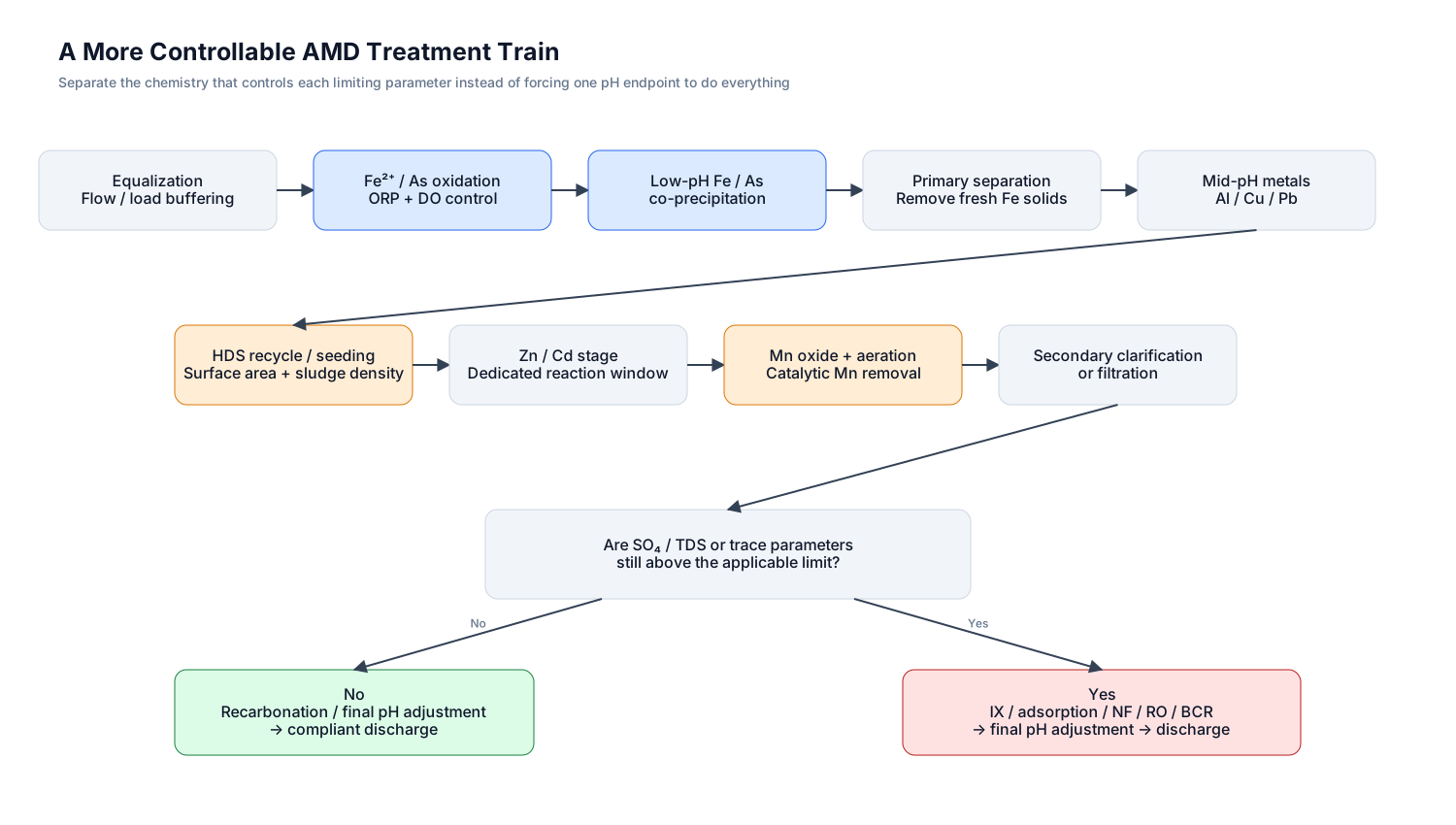
The point is not that every mine must build five reaction stages. The principle is: whichever parameter controls the limit must be given its own suitable chemical environment and sufficient reaction time. A coal-mine AMD dominated by Fe/Al can use a much simpler train. A polymetallic mine with high Zn/Cd/Mn/As plus sulfate is unlikely to have enough control freedom with one lime tank and one settling basin. This multi-technology concept is consistent with EPA MIW guidance, the U.K. metal-mine remediation framework, and the South Crofty permit design.
A Stable-Compliance Control Framework for Operations
First, pH control should shift from “endpoint control” to “reaction-path control.” Operators should not ask only “what is final pH?” They should separately know influent Fe²⁺/total Fe, whether ORP and DO are adequate after pre-oxidation, the pH of the Fe/As co-precipitation stage, whether primary sludge provides enough solid surface area, the true dissolved Zn/Cd concentration, whether the Mn stage contains active Mn oxide and sufficient contact time, and only then the final discharge pH. Fe/As co-precipitation and Mn-seeding studies both show that reactions perform best in their own favorable chemical windows.
Second, chemical dosing should be based on acidity/metal equivalents and feed-forward load, not pH PID feedback alone. At minimum, use:
as a theoretical feed-forward value, with online pH providing smaller feedback correction. The earlier numerical example makes the reason obvious: free H⁺ at pH 3 is about 1 mmol/L, while precipitation OH⁻ demand in a high-Zn/Al/Fe water can exceed 200 mmol/L. A controller that sees only pH will always be “chasing the reaction” after a high-metal load arrives.
Third, hydraulic residence time (HRT) and solids residence time (SRT) must be managed separately. HRT controls the time available for oxidation, nucleation, and adsorption in solution. SRT controls the age, mineral maturity, and reactive surface area of active Fe/Mn sludge. After a plant completely purges its sludge inventory, Mn/Zn removal the next day can differ even if pH and flow are unchanged because the catalytic surface population has changed. Furukori’s results demonstrate that existing Mn sludge can enable Mn treatment around pH 7–8 in about 1 h, whereas the no-sludge system requires substantially higher pH.
Fourth, Fe/Al precipitation should be managed as a continuous “supersaturation–seeding–mixing–flocculation–settling” control chain. Rapid mixing distributes reagent, but every reactor should not be a high-shear zone. Once primary nuclei form, suitable flocculation and aging time are needed for particle growth. HDS recycle should be adjusted according to solids concentration, settling index, particle size, and reaction activity rather than a fixed pump frequency. HDS studies show that solids loading changes sludge moisture, volume, and compression settling.
Fifth, Mn should have an independent “Mn²⁺ rather than total Mn” process indicator. If total Mn is high while dissolved Mn is low, the dominant problem is solid–liquid separation. If dissolved Mn remains high, DO, ORP, temperature, Mn-oxide seeding, and HRT should be checked before adding more flocculant. This diagnostic logic prevents the common cycle of “Mn is high, add lime; turbidity is high, add more flocculant.” Field-water, PHREEQC, and XAFS evidence all support the importance of Mn surface catalysis.
Sixth, As control should track total As, dissolved As, and oxidation-state information, at least during commissioning, so that relationships among As(III)/As(V), Fe²⁺/Fe³⁺, and ORP are established. As removal is best overlapped with the formation of fresh Fe(III) solids. If total Fe is already very low before oxidant is added, the most favorable co-precipitation window may already have been lost. Park et al. and schwertmannite experiments both show that Fe/As co-precipitation cannot simply be replaced by adsorption onto old Fe solids.
Seventh, sulfate must be placed in one of two categories at the beginning of design: “not directly controlled by the permit, but receiving-water load must be assessed,” or “must be actively removed.” If it belongs to the second category, higher lime dose is not the answer. Once gypsum equilibrium is reached, BCR sulfate reduction, membrane separation, or another dedicated desalting process must be evaluated. Berkeley Pit and Grootvlei show that g/L-scale SO₄²⁻ can remain after lime/Fe precipitation, while RO cases demonstrate that membranes can reduce TDS much further.
Eighth, final compliance monitoring should retain both unfiltered total samples and filtered dissolved samples. The former serve regulatory determination; the latter serve diagnosis. At minimum, the outfall should log flow, pH, temperature, EC, and turbidity, with DO and ORP added at key reaction stages. Laboratory coverage should include total/dissolved Fe, Mn, Zn, Cu, Pb, Cd, Al, As, Ca, SO₄²⁻, alkalinity/acidity, and TSS. Only by seeing both “total” and “dissolved” can an exceedance be assigned to the chemical side or the solid–liquid separation side. The simultaneous U.S. coal-mine controls on total Fe/total Mn/TSS make this diagnostic distinction especially important.
A minimum operating decision matrix can be structured as follows:
| Field signal | More likely root cause | What should not be the first response | Priority checks / adjustments |
|---|---|---|---|
| pH compliant, dissolved Fe low, total Fe high, TSS high | Colloid/floc separation failure | Add much more lime | Sludge recycle, flocculation, clarifier loading, filtration, particle size |
| pH compliant, dissolved Mn high | Mn oxidation kinetics inadequate | Add flocculant only | DO, ORP, temperature, Mn seed, HRT |
| Fe very low but As elevated | Missed As co-precipitation window / unfavorable oxidation state | Rely only on terminal adsorption to old Fe sludge | Pre-oxidation, Fe salt / Fe(III) co-precipitation stage |
| Zn/Cd high and SO₄ very high | Complexation, low free-ion activity, insufficient pH window | Use textbook Ksp directly to set endpoint | PHREEQC speciation, staged pH, Mn/Fe surface adsorption, or sulfide polishing |
| EC/SO₄ high while all metals comply | Process has no desalting capability | Keep increasing lime dose | Water balance, gypsum SI, BCR/NF/RO |
| Effluent initially passes, then metals/acidity rise after storage | Solid-phase aging / remobilization / CO₂ and Eh change | Only recalibrate pH probe | Aging tests, mineralogy, sludge age, secondary aeration/reducing conditions |
| Wet-season intermittent failures while monthly average looks good | Peak load / HRT collapse | Recalculate reagent from monthly-average concentration | P95/P99 flow, equalization, feed-forward dosing, reserve reaction volume |
The point of these operating recommendations is to replace empirical over-dosing with mechanistic diagnosis. Grootvlei’s long-term data show that an average Fe of only 0.753 mg/L did not prevent about 16.6% of Fe verification samples from failing. Plant KPIs should therefore not report only “monthly average removal.” At minimum, they should include P95/P99 effluent, longest continuous exceedance duration, lime consumption per unit metal load, sludge generated per unit metal removed, and minimum HRT during peak flow.
QA/QC must also prevent the sampling method itself from changing the compliance conclusion. Total and dissolved samples should be handled separately; a field-filtered sample cannot substitute for a total-metal sample required by a permit. For low-µg/L Cd/Pb/Ni/As monitoring, field blanks, trip blanks, duplicates, spike recovery, and certified reference materials should be used, with adequate margin between the method quantitation limit and the permit or EQS value. The EU 2026 framework continues to make analytical quality and environmental-status assessment part of regulatory water-quality determination. At µg/L or lower EQS scales, laboratory method capability itself becomes part of the compliance system.
Finally, sludge should have a mineralogical aging program treated as seriously as the water line. At minimum, XRD should be performed during process confirmation and whenever sludge properties change materially. High-As or high-risk polymetallic sites can add SEM-EDS, sequential extraction, or XAS/XAFS. The useful question is not merely “how much metal is in the sludge now?” but “is that metal on exchangeable sites, surface-adsorbed, structurally co-precipitated, or locked in a stable crystal lattice?” Field evidence that Pb, Cd, and Co mobility changes during schwertmannite-to-goethite transformation demonstrates why long-term sludge safety cannot be inferred from total concentration alone.
For a new or substantially modified AMD plant, the recommended sequence before fixing final pH setpoints is: characterize the statistical water-quality distribution over at least one complete hydrologic cycle rather than using averages; perform staged-pH titrations and oxidation jar tests on seasonal waters; build a PHREEQC speciation/saturation model; calibrate apparent Fe, Mn, and target-metal kinetics from experiments; and finally run transient analysis at P95/P99 rather than average flow. This is how “chemically possible to comply” can be converted into “engineered to achieve a sufficiently high probability of stable compliance.” PHREEQC’s documented capabilities and long-term HDS field results both support this equilibrium–kinetic–statistical three-layer approach over a single equilibrium calculation.
Conclusion and References
The real value of conventional lime neutralization should not be underestimated. Ca(OH)₂ remains one of the most mature, fastest, and most scalable reagents for controlling large AMD acidity loads. It can move strongly acidic, high-Fe/Al mine water rapidly into a chemical region favorable for precipitation and downstream treatment. The problem is that lime provides alkalinity and Ca²⁺; it does not provide oxidation time, adsorption surface area, crystal maturation, colloid filtration capacity, or a final sink for sulfate. Interpreting “lime failure” as failure of the Ca(OH)₂ chemical reaction is therefore incorrect. What fails is a process philosophy built around one pH endpoint.
The real data assembled here show a highly consistent pattern. Fe/Al can transfer rapidly into solids at lower pH, while Zn, Cd, and especially Mn require higher pH and/or longer kinetic pathways. Optimum As treatment depends on freshly forming Fe(III) minerals and oxidation state. Sulfate can remain at g/L concentrations after gypsum equilibrium. Fresh Fe/Al precipitates can pass clarification as colloids. Metastable solids such as schwertmannite can later age, release H⁺ and SO₄²⁻, and change the mobility of Pb, Cd, Co, and other elements. The real object of an AMD plant is therefore not simply “acidic water,” but an evolving aqueous–colloid–mineral–gas–microbial multiphase reactor.
The most persuasive field conclusion comes from long-term statistics: an HDS system can achieve roughly 99.5% average Fe removal and still fail to make every Fe verification sample compliant; pH can be compliant about 97.6% of the time without Fe, Mn, and TSS achieving the same compliance frequency. AMD design and acceptance metrics should therefore evolve from “average removal efficiency” toward compliance probability. That shift is especially important as European and North American water regulation increasingly emphasizes receiving-water status, trace metals, and continuous performance.
The final recommendation can be reduced to one sentence: keep lime, but abandon the belief in “single-stage lime + pH endpoint + natural settling” as a universal solution. Treat Fe/As oxidation and co-precipitation, Al/heavy-metal precipitation, Zn/Cd polishing, Mn surface-catalyzed oxidation, and sulfate/TDS control as independently configurable functions. Use sludge recycle to create surface area, residence time to protect kinetics, filtration to protect total-metal compliance, PHREEQC to constrain thermodynamics, online ORP/DO/EC/turbidity to reveal states that pH cannot see, and finally P95/P99 concentrations plus receiving-water mass balance to define compliance. That is much closer to the actual geochemistry of AMD than searching for one universal pH setpoint.
Key References
Singer, P. C., & Stumm, W. (1970). Acidic Mine Drainage: The Rate-Determining Step. Science, 167, 1121–1123. This study established the key kinetic role of Fe(II) oxidation in the AMD reaction chain.
Park, J. H., et al. (2016). Comparison of arsenic co-precipitation and adsorption by iron minerals and the mechanism of arsenic natural attenuation in a mine stream. Water Research, 106, 295–303. DOI: 10.1016/j.watres.2016.10.006.
Kim, H.-J., & Kim, Y. (2021). Schwertmannite transformation to goethite and the related mobility of trace metals in acid mine drainage. Chemosphere, 269, 128720. DOI: 10.1016/j.chemosphere.2020.128720.
Carlson, L., Bigham, J. M., Schwertmann, U., Kyek, A., & Wagner, F. (2002). Scavenging of As from Acid Mine Drainage by Schwertmannite and Ferrihydrite: A Comparison with Synthetic Analogues. Environmental Science & Technology, 36, 1712–1719. DOI: 10.1021/es0110271.
Burton, E. D., et al. (2021). Arsenic-Imposed Effects on Schwertmannite and Jarosite Formation in Acid Mine Drainage and Coupled Impacts on Arsenic Mobility. ACS Earth and Space Chemistry. This work uses field and synchrotron evidence to examine structural immobilization of As in Fe(III) minerals.
Piñon-Flores, L., et al. (2024). Mine Water and the Environment. Primary study of alkaline neutralization and Mn-mineral-solid intensification for AMD from a Zn sulfide mine, DOI: 10.1007/s10230-024-01003-2. The study reports real AMD at pH 3.0 containing Zn 4,830 mg/L, Al 445 mg/L, and related Zn/Cd residual and kinetic data after neutralization.
Furukori, K., et al. (2024). Study based on field mine drainage, PHREEQC, and XAFS examining the effect of Mn-sludge addition on Mn/Zn removal. The study shows that γ-MnOOH surface complexation and Zn–Mn solid formation can markedly accelerate Mn treatment at pH 7–8.
De Wet, L. P. D., & Sidu, S. (2013). IMWA conference paper on long-term operation of the Grootvlei Mine HDS system. The data cover roughly 3,500 d and report long-term Fe, Mn, TSS, pH, and SO₄ performance and compliance frequencies.
Lourenço, M., & Curtis, C. (2021). Water SA. BACI water-quality study before and after HDS commissioning in South Africa’s Eastern Basin, showing that Fe improvement and sulfate/conductivity pressure can coexist.
Mackie, A. L., & Walsh, M. E. (2015). Water Research. Experimental work on alkaline material, solids loading, sludge volume, moisture, dewatering, and compression settling in HDS treatment.
Berkeley Pit long-term hydrochemistry study (2020). Mine Water and the Environment. Documents long-term Fe precipitation, increasing pH, and sulfate/gypsum evolution, showing SO₄²⁻ remaining near 7,000 mg/L while Fe falls from about 1,000 mg/L to <5 mg/L.
U.S. Geological Survey. PHREEQC Version 3—A Computer Program for Speciation, Batch-Reaction, One-Dimensional Transport, and Inverse Geochemical Calculations. PHREEQC supports ion association, Pitzer/SIT, KINETICS, SURFACE, and CD-MUSIC geochemical models.
U.S. Geological Survey. PHREEQC Example 8 / SURFACE documentation. Provides official examples for strong/weak Hfo/ferrihydrite surface sites and pH-dependent surface complexation.
U.S. Environmental Protection Agency. (2014). Reference Guide to Treatment Technologies for Mining-Influenced Water. This official guide compiles applicability, limitations, case performance, and 2013-dollar costs for ALD, BCR, RO, ion exchange, adsorption, and other MIW treatment technologies.
U.S. Environmental Protection Agency. Coal Mining Effluent Guidelines, 40 CFR Part 434. EPA material confirms that acidic or ferruginous mine drainage is a regulated subcategory and includes controls for Fe, Mn, TSS, and pH.
U.S. EPA. Technical review materials related to 40 CFR Part 434. BPT/BAT/NSPS requirements for acidic mine drainage include total Fe, total Mn, TSS, and pH.
U.S. Environmental Protection Agency. Ore Mining and Dressing Effluent Guidelines, 40 CFR Part 440; and the National Hardrock Mining Framework. Hard-rock mine drainage is governed by source-category requirements together with NPDES water-quality-based permitting.
European Parliament and Council. Directive 2006/21/EC on the management of waste from extractive industries. Mine-waste-related discharges must be integrated with the Water Framework Directive’s environmental-protection framework.
European Parliament and Council. Directive (EU) 2026/805, adopted 30 March 2026. The directive amends the Water Framework Directive, Groundwater Directive, and Directive 2008/105/EC and updates the priority-substance and river-basin-specific-pollutant EQS framework; Member State transposition is due by 21 December 2027.
Directive (EU) 2026/805, Annex VI. Revised inland-surface-water AA-EQS values include hardness-dependent Cd ≤0.08–0.25 µg/L, Pb 1.2 µg/L, and Ni 2 µg/L, with corresponding MAC-EQS values. These are receiving-water environmental quality standards, not universal mine-outfall limits.
UK Environment Agency. South Crofty Mine environmental permit decision document. The project permits large-scale mine-water treatment/discharge, uses HDS for heavy metals and hydrogen peroxide for arsenic control, and includes receiving-water protection requirements.
UK Environment Agency. Mitigation of Pollution from Abandoned Metal Mines. Official research emphasizing the importance of pH, Eh, flow, metal loading, and area-normalized removal in active/passive mine-water treatment design.